
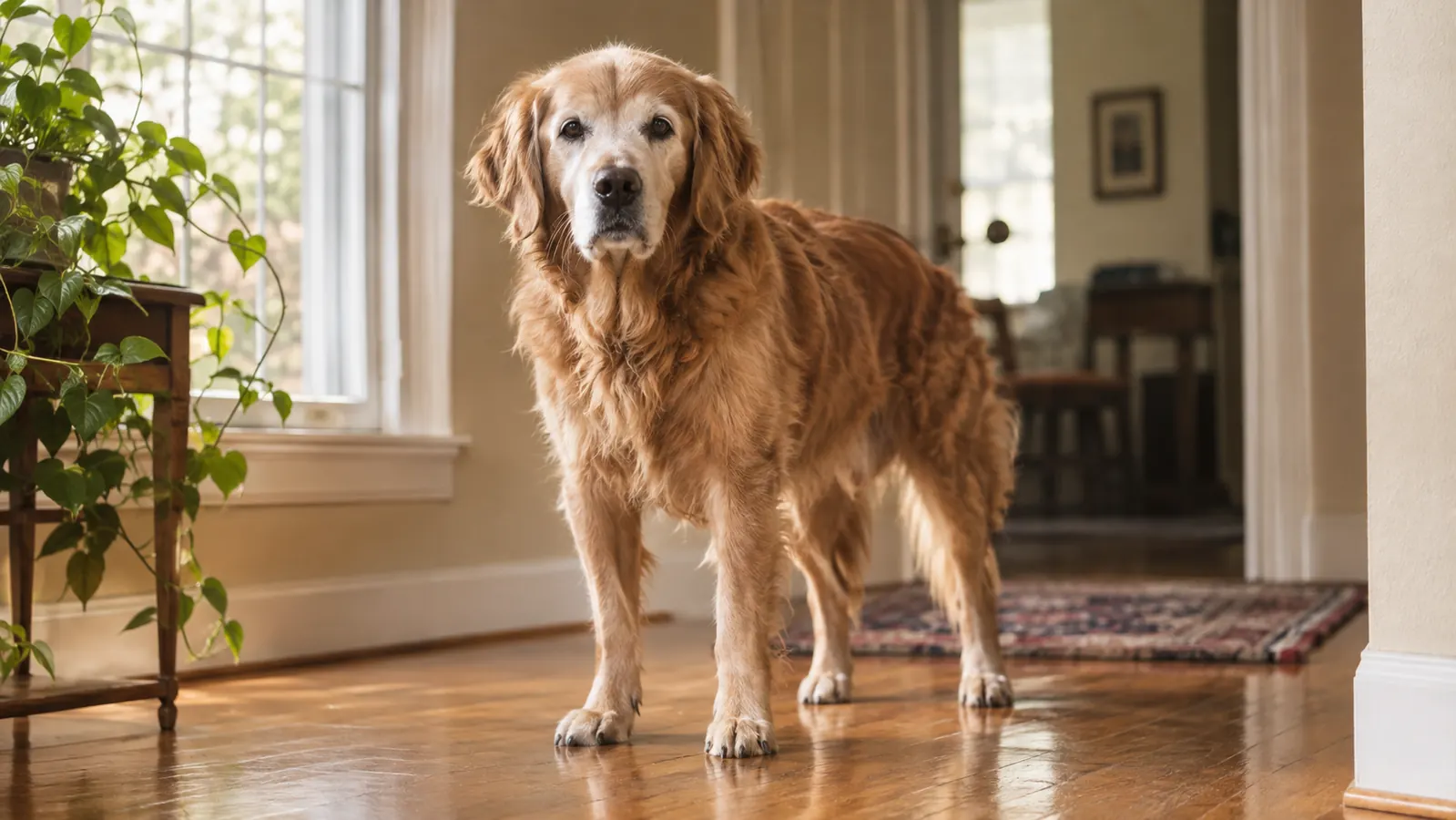
I bought the DOK TigerToes socks last winter for one reason. Rosie's back legs slid out from under her on the hallway hardwood and she went down in a heap, then lay there a second before she pushed herself back up. She is a 9-year-old yellow Labrador mix, about 68 pounds, adopted from a county shelter when she was two. That was the second fall in a month. I had already put a runner rug down the middle of that hall. She missed it. She always misses it, because dogs do not walk in straight lines and rugs do not cover the whole floor.
This is not the review that tells you these socks are wonderful and you should hurry. They are good at one job, they have a couple of annoying habits, and there is a sizing detail that causes more trouble than anything else about them. What follows is how I use them, how they fit a big older dog, what the first week actually looked like, how the grip holds when a sock turns halfway around on the paw, how they wash, and the honest list of situations where something else is the better call. Our vet gets mentioned further down, because she should be.
The Quick Verdict
Real traction on dry hardwood for a big older dog, and a set that survived a full winter of weekly washing. The sizing is a paw measurement, not a weight guess, and the strap has to go on snug or the sock ends up sideways.
Amazon Check Today's Price →One paw measurement decides whether four socks stay on or live under the couch
The Large fits paws 2.5 to 2.8 inches. Measure flat on the kitchen floor, front to back, no squeezing the toes together. Then set the hook and loop strap snug and give it a week.
Amazon Check Today's Price on Amazon →How I Use Them, Day to Day
Rosie wears them indoors on the hardwood, mornings and evenings, and nowhere else. Not on the walking trail by the French Broad, where a slow mile most mornings is the best part of her day. Not in the back yard, where grass and dirt would wick straight into cotton. Not overnight, because she sleeps on her bed in the corner of the living room and there is no reason to have anything on her feet while she is lying down.
The set is four socks. That is worth saying plainly, because four socks on a dog with four paws means every paw is covered at once and there is no spare sitting in a drawer. I wash them on Saturday with her blankets, so Saturday morning she goes bare until they come back out. She does not seem to mind. The hallway is at its slickest on Saturday morning and I have learned to walk beside her on it.
Saturday morning is also where I stopped doubting the whole idea. I let her out into the back yard while the wash runs, and when she comes back in she crosses that hallway barefoot and I watch her do it. Nine steps from the kitchen doorway to the living room rug, and by the fourth one her back end is swinging wide and her nails are skittering. Same dog, same floor, fifteen minutes later with socks on, and she walks it in a straight line with her head up. I have counted those steps enough Saturdays in a row now that I am confident it is not wishful thinking on my part.
I am 67, a widower, and I spent my working life as a physical therapy aide before I retired. That means I have watched a great many people walk badly and then watched them learn to walk better, and I cannot turn the skill off. Watching Rosie cross that floor is the same exercise. She shortens her steps. She leans forward and shifts weight off the hind end. She swings her back legs out wide, the way a person does on ice. On the socks she walks like herself again, normal stride, head up.
Sizing Is Where Most People Get This Wrong
DOK lists the Large for paws 2.5 to 2.8 inches, and that is the number that matters. Paw measurement, flat on the floor, front to back, no squeezing the toes together to make it fit a size. I measured Rosie's front paw on the kitchen tile with a wooden ruler and got a hair over 2.6 inches, which put her comfortably in the Large with a little room on both ends. That is not much margin when you are talking about a fraction of an inch across a whole paw, which is exactly why the ruler matters more than the size name.
I used a wooden ruler because the soft tape measure I keep for mending kept sliding off the pad and giving me a different answer every time. Flat ruler, paw flat on the tile, from the back of the heel pad to the tip of the longest nail, and let the dog stand on his own four feet while you do it. Rosie shifted twice, and I got 2.5, then 2.7, then 2.6 depending on which foot she was leaning on. The middle number is the one that matched how the socks actually fit. Two minutes of that is worth more than any size chart on any listing.
Here is the part the box does not explain well. A 68-pound dog lands in Large. So does a 95-pound dog. So does a short, thick 55-pound dog with wide feet. Weight is a rough sorting tool and nothing more. If your dog measures 2.9 inches you are past the top of Large, and a sock that tight rolls at the cuff and works itself off within the hour. If your dog measures 2.4 and you order Large because he is a big handsome fellow, you get a sock that bunches and twists and a dog who decides socks are a nuisance for the rest of his life.
Measure twice, and measure the back paws too, because plenty of dogs are not symmetrical. Rosie's back paws run a little wider than her fronts and there is not much margin in the Large, but they fit and they stay on. I would rather tell you that than pretend all four paws are identical, because the back paws are the ones that twist.
The First Week and the Strap
The first time I put them on, she stood in the middle of the kitchen and looked at me as though I had put her shoes on backwards. She lifted one front paw and set it down. Then the other one. Then she walked about four feet and stopped and looked back at me.
By day three she was walking normally in them. The thing that helped was not making a production of it. I put them on, gave her a piece of her dental chew early, and went about my business. Dogs read your nerves. If you stand over them waiting for a problem, you generally get one.
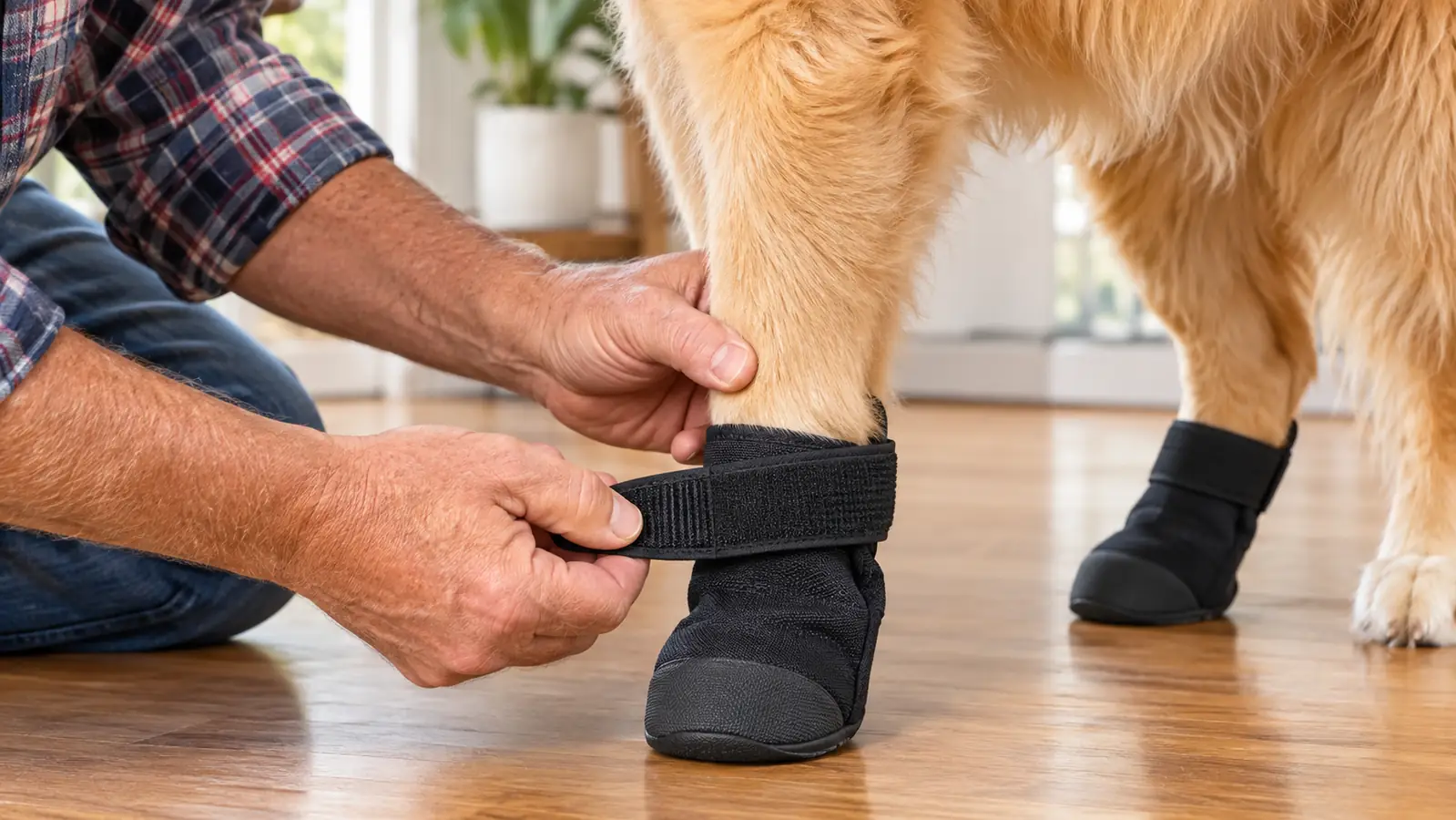
She pulled a sock off with her teeth twice that first week. Both times it was the same back paw, and both times the hook and loop strap was not snug. The closure is a strap over the cuff plus the pull-on fit, and the strap is what holds the whole thing in place. Snug is the word, meaning you cannot slide the sock forward with one finger, but not so tight that it leaves a dent in the fur. It took me about three days to find that tension by feel. Now I can do all four paws in under a minute while she waits at the door.
The fifth night is the one I remember, because the doorbell went off, which almost never happens out here, and she went from lying flat on her bed to the front door in a trot with all four socks on. She took the turn at the end of the hall without breaking stride. Six weeks earlier that same turn had put her into the wall. I apologized to the delivery driver and then stood in my own hallway for a minute feeling unreasonably pleased with a set of socks, which is not a sentence I expected to think at 67.
The Grip, Twisting Included
The grip is the reason to buy these and it is genuinely thick under the paw. Our hardwood is original to a 1960s brick ranch house and it has been polished by fifty years of feet. Before the socks, Rosie's nails clicked and skidded every time she turned toward the kitchen. With them on she turns and keeps her feet under her, without the wide-legged balancing act.
DOK calls it three times more grip than an ordinary sock, and I cannot measure that on my kitchen floor, but I can tell you what it feels like under a thumb. The pad is a rubbery layer with a raised texture, closer to the sole of a water shoe than to a sock, and it does not flatten out under pressure. That is the difference between these and the thin grip socks you see in a bin at a pet store, the ones with a printed dot pattern that is polished smooth inside a month.
The listing says the grip works even when the sock twists, and I can confirm that from the wrong end of the experience. A sock does twist. Over the course of a morning, usually on a back paw, one will rotate partway around so the grip pad ends up on the side of the foot instead of underneath. She keeps her footing when it happens. That matters more than it sounds, because a twisted sock is exactly the failure that makes people give up on dog socks and go back to buying throw rugs.
What they will not do is save her on a wet floor. The tile by the back door after rain is slippery no matter what is on her feet, and the same goes for the porch steps when they are damp. Dry hardwood is the job. They do that job well. A puddle is a puddle.
She has not gone down on that hallway once since the second week of January. That is the whole review. Everything else is detail.
Wear, Washing, and What a Season Did
The socks are cotton and nylon and they machine wash, which matters more than the product page lets on. A sock a dog wears on a floor picks up everything the floor has, and a house with a dog in it has a floor with a good deal on it. I wash them weekly with her bedding in a warm load and let them air dry on the counter, because I want a set to last a winter rather than a month.
One week in March she came in from the yard with wet paws and I pulled the socks on before I thought about it, and that is how I learned they wick. Cotton does what cotton does. Damp paw, damp sock, and a dog who is now sliding slightly inside her own footwear instead of on the floor. That was my mistake, not the sock's. I keep a towel by the back door now and dry her feet first, which takes ten seconds and settles it.
After a full season the cuffs have relaxed a little and the grip pad is still there. No holes at the toe, which surprised me given how much of Rosie's weight lands on her front feet when she pushes up off the floor. One sock has a thin spot where the strap crosses it, and I expect that is simply what happens to cotton with a strap pulled across it every day. No odor problem to report either, and I say that as a man who has thrown away more dog bedding than he cares to admit. Weekly washing handles it. Wash them once a month and you will not like what you smell. The DOK set has held up about as well as I could reasonably ask a piece of fabric to hold up under a 68-pound dog who wears it twice a day.
The Alternatives I Tried First
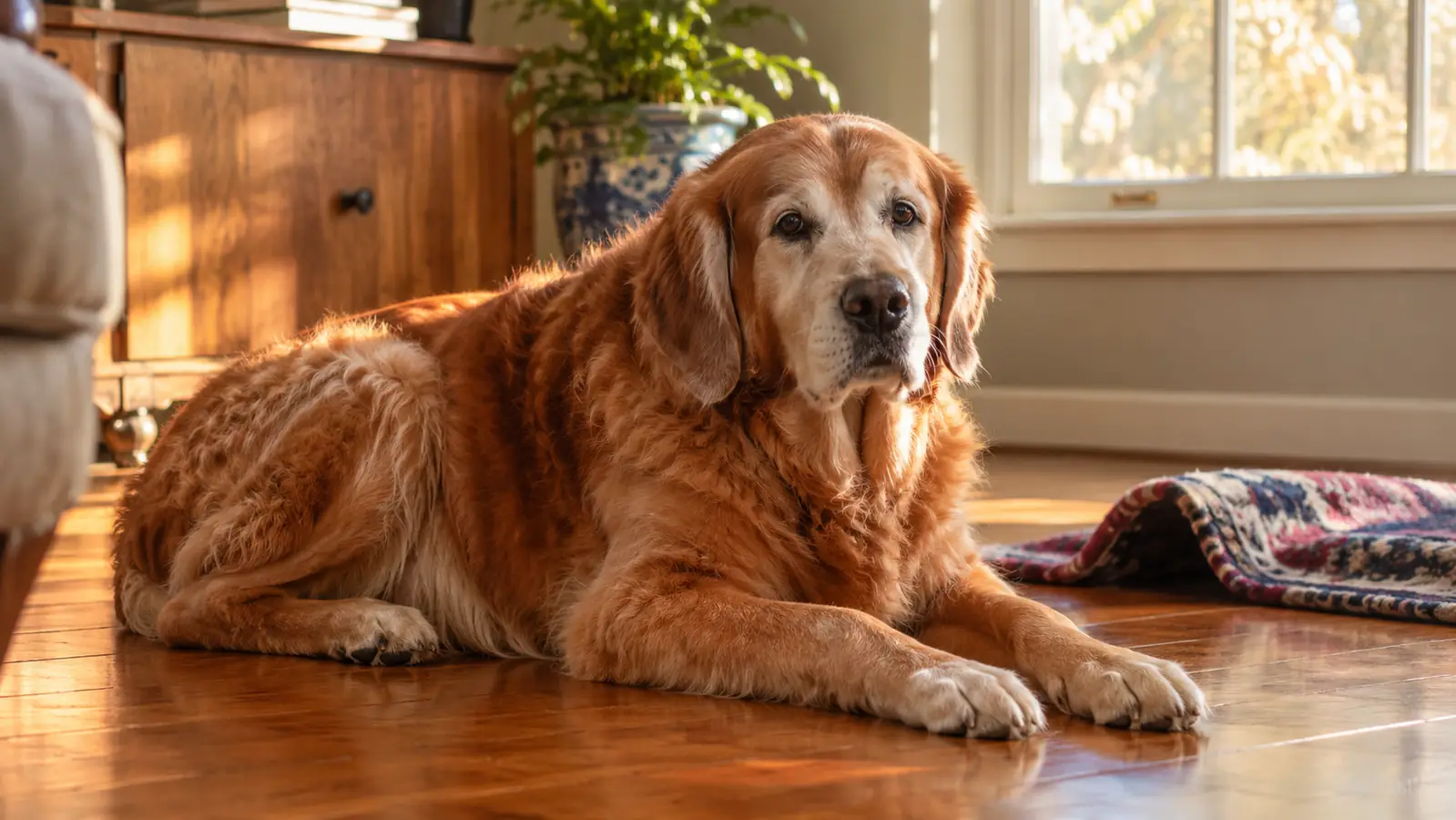
Before the socks I tried rugs. Rugs work until the dog steps off the rug. Rosie is a social walker. She follows me from the kitchen to the living room to the bedroom and back, and covering that path in runners would have cost more than a set of socks and made the house look like a bowling alley.
I looked at the stick-on toe grips, the little rubber caps that go on individual nails. They are a reasonable option for some dogs and I know people who swear by them. What stopped me was the upkeep, since they need replacing as nails grow and Rosie is not patient about having her feet handled one toe at a time. I also trim the fur between her pads, which helps and which I still do, but it did not stop the sliding on a floor that slick. The socks won because they cover the whole paw, come off in a second, and go in the wash.
What I Liked
- Genuine traction on dry hardwood, thick enough that an older dog stops doing the wide-legged balance walk
- The grip still works when a sock rotates partway around on the paw, which is the failure that ends most dog sock experiments
- Machine washable, and a set held up through a full winter of weekly washing
- Four socks in the set, so all four paws are covered at once
- Fast to put on once you find the right strap tension, roughly a minute for all four paws
Where It Falls Short
- Sizing goes by paw measurement alone, so buying by the dog's weight is how you end up with socks that twist or roll
- The hook and loop strap has to be snug or the sock comes off, and it took me about three days to get that right
- A sock does twist now and then and needs straightening, usually on a back paw
- No spare in the set, so laundry day means bare paws
- Not for wet floors, not for outdoors, and not for a dog who chews at things on his own feet
What These Socks Do Not Do
They do not treat anything. Rosie has mild hip arthritis that Dr. Patel at our clinic in town noted at her age-8 checkup. The socks do not touch the arthritis. She takes a joint supplement with her breakfast and has for about a year, and the socks keep her from slipping on a floor that was making a bad hip worse every time she went down. Two different jobs, and it is worth being clear about which one you are buying. They also do not replace a vet visit. If your dog is dragging a back paw, knuckling over on top of the foot, or suddenly unable to rise, put the phone in your hand and call the clinic. Socks are for a dog whose feet work and whose floor is too slick.
They will not fix long nails either. If you can hear the nails clicking across the room, trim them. A sock pulled over long nails wears through at the toe, and the dog is still sliding inside the sock. The nails are the cheapest part of this problem to solve and the first thing to check.
Who This Is For
This is for the owner of a big or older dog on hardwood, tile, or laminate who has watched the back legs slide out and felt their stomach drop. It is for a dog who is still walking and still wants to walk and just needs the floor to stop fighting back. It is for a household that will measure a paw with a ruler, set a strap snug, and straighten a twisted sock without deciding the whole thing is broken. If that is you, four socks against another rug you would have bought anyway is a fair trade.
Who Should Skip It
Skip it if your dog chews at things on his own feet. These will be gone in an afternoon and you will be out a set. Skip it if there is an open sore or a bandage on the paw, because a sock over a wound is a question for your vet before it is a question for a shopping cart. Skip it if you want an outdoor boot for hot pavement or winter salt. The listing mentions outdoor protection and I think that is generous. This is an indoor sock.
And skip it if you will not measure. Most of the complaints about this product come down to fit, and most fit problems come down to buying by weight instead of by paw. It is a two-minute job with a ruler, and it decides whether these are the thing that keeps your dog upright or another gadget in the closet.
If the back legs have gone out from under your dog on a slick floor, start with the paw measurement
Large fits paws 2.5 to 2.8 inches. Four socks, machine washable, and the grip holds even when one twists. Snug the strap, give it a week, and measure before you order.
Amazon Check Today's Price on Amazon →