
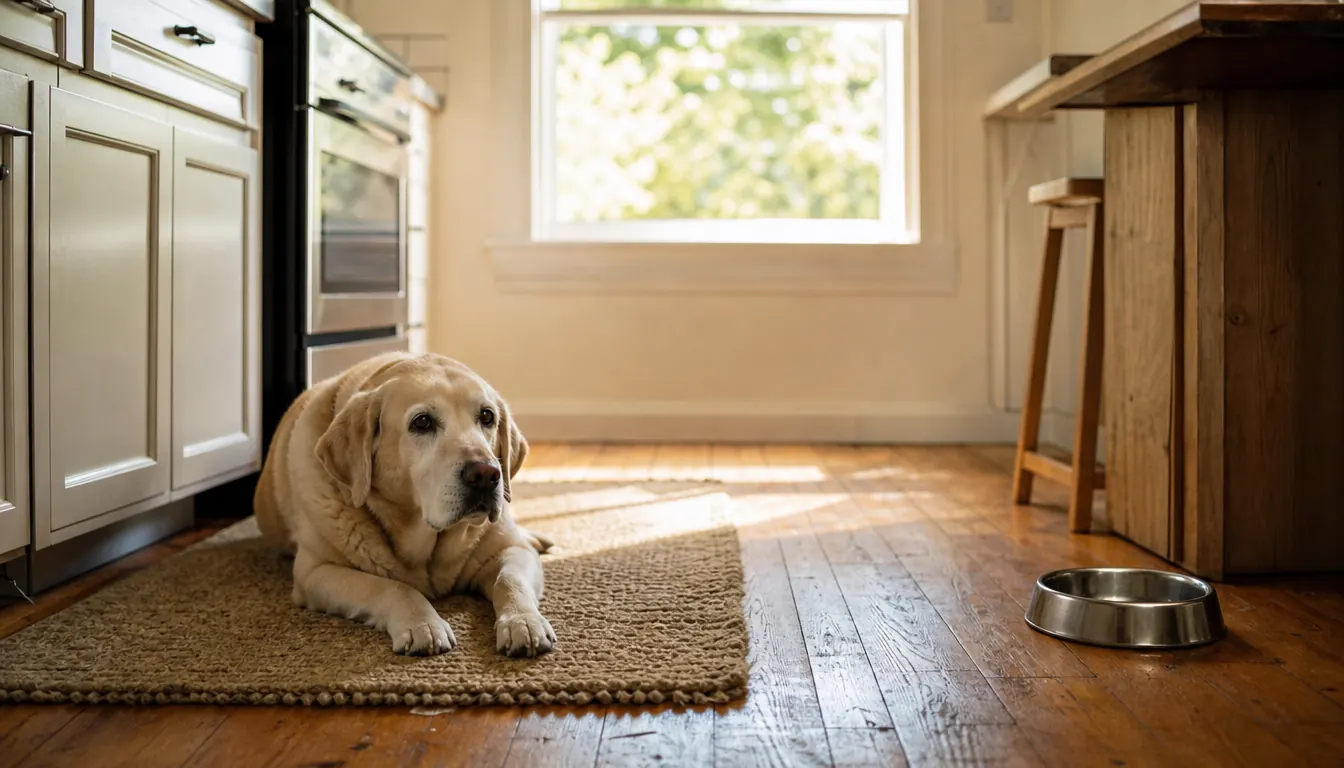
Rosie had eaten the same kibble for years, so last spring when I brought home a different bag and switched her over in about two days, I did not think much of it. By the third day her stools were loose. By the fourth she was asking to go out at two in the morning and I was standing in the backyard in my bathrobe holding a flashlight, waiting on a sixty-eight pound Labrador mix to finish so I could go back to bed. That was not a mystery. That was me moving too fast. Dr. Patel, our vet, heard the whole embarrassed story and suggested a probiotic powder called Pro Plan Veterinary Diets FortiFlora while we let her gut settle down.
The week passed and she came back to normal, but the episode taught me something thirty years of watching bodies recover should have taught me already. The boring parts do most of the work. Consistency, timing, one change at a time. The powder helped, and I keep a box in the pantry now, but it helped inside a routine rather than instead of one. What follows is that routine, written the way I would explain it to a friend in the church parking lot on Sunday morning. One caution before you read further. I am a retired physical therapy aide, not a veterinarian. If your dog is vomiting, flat, or has had loose stool for more than a day or two, call your vet first and read this later.
The One Thing I Keep on the Pantry Shelf for the Bad Weeks
A single-serve probiotic powder you sprinkle on dinner. No pill to hide, no wrestling match at the bowl. Ask your vet whether it fits your dog, then check the current price.
Amazon Check Today's Price on Amazon →Step 1: Call the Vet Before You Call the Internet
I have a rule now, and it took one bad week to build it. A single loose stool is a wait and see. Loose stool that runs past a day or two, or comes with vomiting, or comes with a dog who will not get off her bed, is a phone call. So is blood, so is a dog who suddenly starts draining the water bowl, so is weight coming off without an explanation. Those are not probiotic problems. Those are veterinarian problems, and nothing in my pantry is going to sort them out. When Rosie had her bad week, the call came first. Every other decision came after it.
What Dr. Patel asked me on that call is worth repeating, because it saved us time. When did it start. What changed in the last week. Is she eating. Is she drinking. Is she bright or flat. Had I switched foods. That last question solved it in about ten seconds, because yes, I had, and I had done it in two days. Have those answers ready before you dial and you will get further, faster, and with less guessing on both ends of the line.
One more thing about that conversation. Ask what to feed during the upset and how long to wait before you judge whether anything is working. A vet will give you a clearer answer in one sentence than an hour of reading forum threads at midnight will. I say that as a man who has read plenty of midnight forum threads.
Step 2: Change One Thing, and Change It Slowly
The usual advice for changing foods is to blend the old and the new across seven to ten days, starting with a small share of the new and working up as the dog tolerates it. I knew this. I have known it for years. I did it in two days anyway because the new bag was sitting there and it seemed simpler than measuring two foods into one bowl. That is how a dog ends up with a sensitive stomach story. Whatever the change is, food, treats, a new supplement, make one move at a time and give it a week before you judge it.
Same rule for supplements, which is why I do not start two in the same month. When I began the salmon oil last July for her itching, I worked up to the label amount over about a week instead of going straight to the full pump count, because I did not want to learn the hard way that her gut disagreed with it. If you change three things at once and the stool goes loose, you have learned nothing. You just have three suspects and a dog who feels bad.
This extends to everyone who feeds your dog, which in my house is me and, twice a year, my daughter up from Charlotte with a pocket full of biscuits. Visitors mean well and dogs are not stupid. If you are testing something new, keep the rest of the week boring, tell the company to skip the table scraps, and let one variable speak. I have had to say that sentence out loud more than once, and I have had to say it to myself more often than that.
Step 3: Add the Probiotic by the Label and Your Vet's Instructions
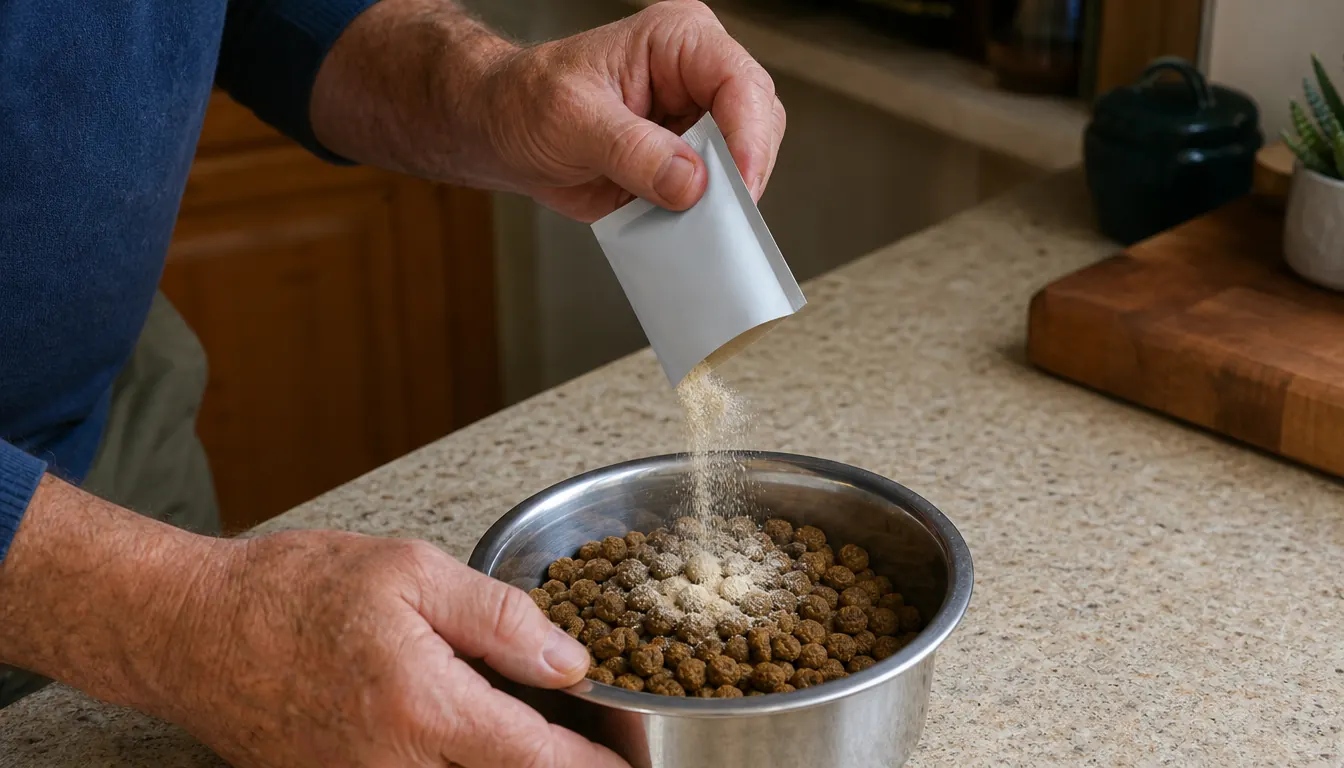
Pro Plan Veterinary Diets FortiFlora arrives as a small box of thirty single-serve powder packets. The box is about three inches on its longest side, which is why mine lives in the pantry door. The packet goes on the food. That is the entire delivery system, and it is the reason I stayed with it. There is no pill to hide in a slice of cheese and no wrestling match at the bowl. The active ingredient on the label is Enterococcus faecium SF68 at 1x10^8 CFU, with liver flavor and yeast listed among the inactive ingredients. The listing describes it as a probiotic for the dietary management of puppies and adult dogs with diarrhea, notes antioxidants for immune support, and carries the claim of being the number one vet-recommended probiotic brand based on an online survey of US veterinarians.
The part I will not answer for you is how much and how long. That belongs to your vet and the label, not to a retired physical therapy aide in Hendersonville. For us, Dr. Patel laid out one packet on Rosie's dinner each evening for about a month, and that is what we did. Two small habits came out of it. Put the powder on the portion rather than on top of a full bowl a dog might walk away from, and do not stir it into anything hot. It vanishes into wet food, or into a splash of warm water mixed through kibble, and a dog who licks the bowl clean is a dog who got the whole dose.
One honest note. This is a supplement, not a treatment, and it does not replace a diagnosis. If your dog is on other medications, has a condition your vet is already managing, or the upset keeps coming back, say so before you add anything, even something as mild as a powder. The label is not a plan for your particular dog. Your vet is.

Step 4: Give It a Month, and Write Down What You See
Rosie's stools firmed up within the first week or so. I want to be careful with that sentence, because I have read enough pet marketing to know how it can sound. Nothing switched on. She simply had one less urgent trip outside, then a normal morning, then a stretch of days where I stopped thinking about it at all. If I had judged the Pro Plan Veterinary Diets powder on day two, I would have thrown the box in the trash and told everyone it did nothing.
So I keep a steno pad on the kitchen counter. Three lines a day, about twenty seconds of work. Stool, appetite, and how she moved on the morning walk. It sounds fussy and it is fussy, but it is the only reason I can tell you anything useful a month later. When you change one thing, the pad tells you whether it worked. When your dog has a bad week, the pad tells the vet what happened and when it started. Mine has coffee rings on it. Yours can be the notes app on your phone.
Judge on the dog, not on the calendar. A month is a reasonable window for gut stuff in my experience, but if things are getting worse at any point, stop and call. And when the month is done and your dog is back to normal, keep a box on the shelf. That is the whole reason I have one. The next upset will not announce itself on a convenient day.
Step 5: Build the Rest of the Day Around the Gut
A probiotic is one input. The rest of the day is a dozen more. Rosie eats at the same two times every day, roughly seven in the morning and five in the evening, and I do not leave food down between meals. Her water bowl gets rinsed and refilled twice a day. Treats are counted rather than free poured, because a dog can get a loose gut from a handful of something new as easily as from a whole bag of food. And she gets her slow mile by the French Broad most mornings, which does more for her than people give plain walking credit for.
Stress counts too, and that is the part I understand from my old job. Bodies are not machines with separate compartments. A house full of company, a car ride in the back of the Outback, a thunderstorm at three in the morning, a change in who fills the bowl, all of it can show up in the gut. Keep the schedule steady in the weeks when nothing else is steady. It is also why I do not change her food when we have visitors, no matter how convenient the timing looks.
For the record, since people ask, the joint chew, the dental treat, the oil and the socks all sit in the same routine. I add them one at a time and I watch what her gut has to say about each. That is not discipline. That is scar tissue from the spring.
What Else Helps
Three things I would spend money on before I spent it on another supplement. First, a food your dog does well on, and then the patience to leave it alone. Second, portion control. A few extra pounds is extra strain on hips and digestion both, and Dr. Patel has been on me about Rosie's weight since her age-eight checkup. Third, water. I know how that sounds. A dog who drinks steadily through the day usually has an easier time than one who tanks up once and then goes flat on the rug.
Beyond that, the yearly exam does work no pantry can. Her hips get felt, her weight gets recorded, her teeth get checked. The dental chew she gets after the evening walk has made a visible difference in her breath and the back teeth look better at her checkups, but it does not replace the dental exam and I would not pretend it does. Same story with the joint supplement. It helps. It has not cured anything, and she is still stiff on cold mornings when the mountains get down into the thirties.
If you want to look into the probiotic further before you buy, the sensible order is this. Ask your vet whether it fits your dog. Check the current price and the packet count so you know what you are getting. Then start it inside a boring week, one change at a time, with the steno pad on the counter. That is how I got from a two in the morning flashlight to a dog who sleeps through the night, and it was not one product that did it. It was the order I did things in.
It was not a switch flipping. It was one less urgent trip outside, then a normal morning, then a week where I finally stopped thinking about it.
If Your Vet Says Yes, Keep a Box Where You Can Reach It
Thirty single-serve packets, one sprinkle on dinner, nothing to hide in cheese. It is the simplest thing in Rosie's routine and the one I am gladdest to have on a bad week. Ask Dr. Patel first, then look at the current price.
Amazon Check Today's Price on Amazon →