
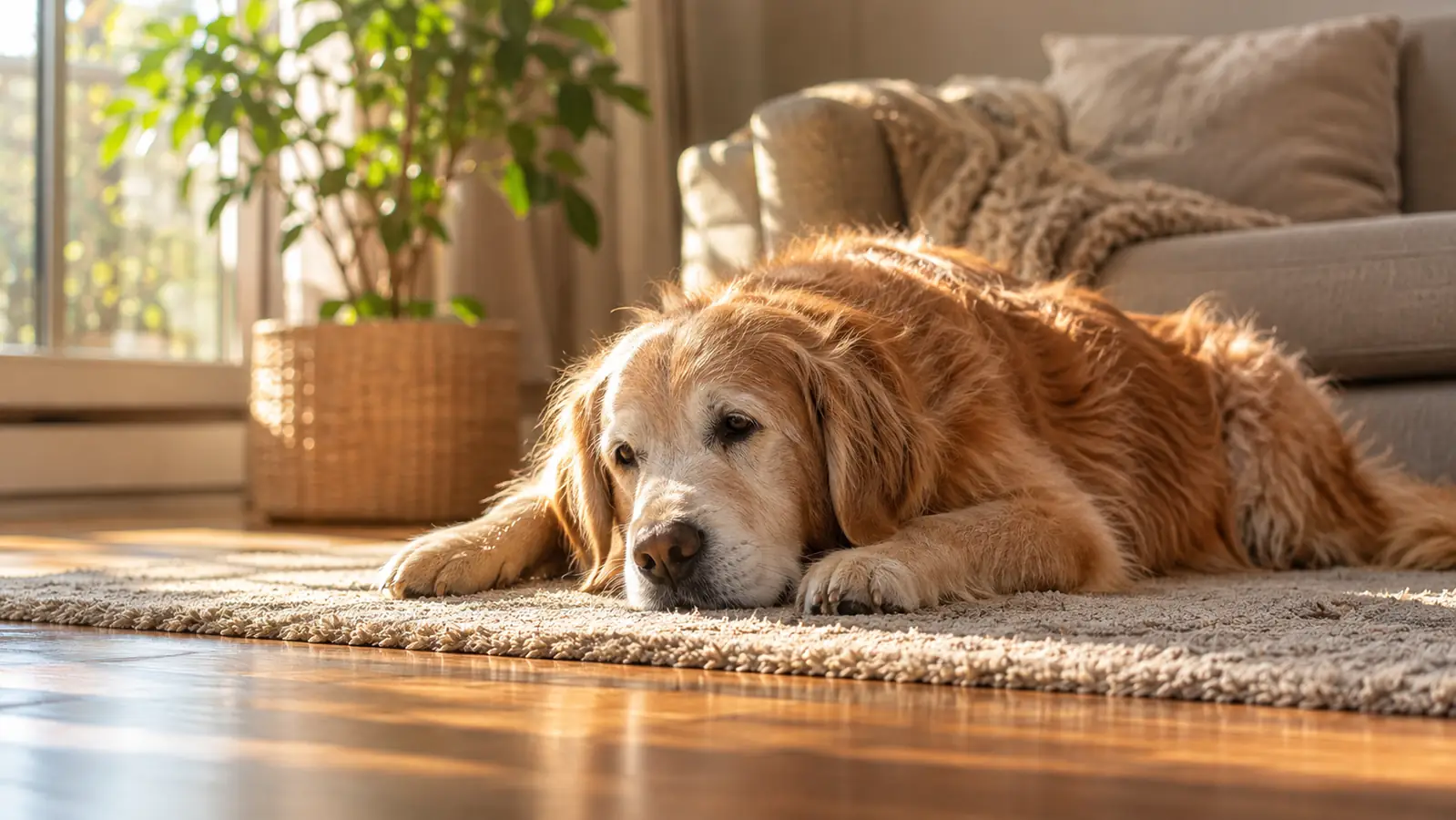
Rosie turned nine this spring, and at some point in the last year she stopped launching herself off her bed in the morning. Now she puts her front legs down first, pauses, thinks it over, and then brings the back end along. That pause is what got my attention. I spent a career as a physical therapy aide, so I know what a stiff hip looks like when a body stands up after sitting too long. I recognize it in a person immediately. It took me two months to admit I was looking at it in my own dog.
Two things are true at the same time here. There is no overnight fix for an older dog's joints, and anyone selling you one is selling you something else. And a handful of small, boring changes, stacked on top of each other, make a real difference in how a stiff dog gets through a day. I know because I made them. One of them was adding Nutramax Laboratories Cosequin to Rosie's breakfast, at the amount on the label for her weight, after our vet Dr. Patel said a glucosamine and chondroitin supplement was reasonable to try.
What follows is the order I would do it in if I had to start over, with the supplement placed where it belongs, which is not first and not last. It is one part of a routine. Nothing here replaces your own veterinarian, and none of it is a cure.
The easiest piece of the routine to start is the one that comes with a label amount for her weight.
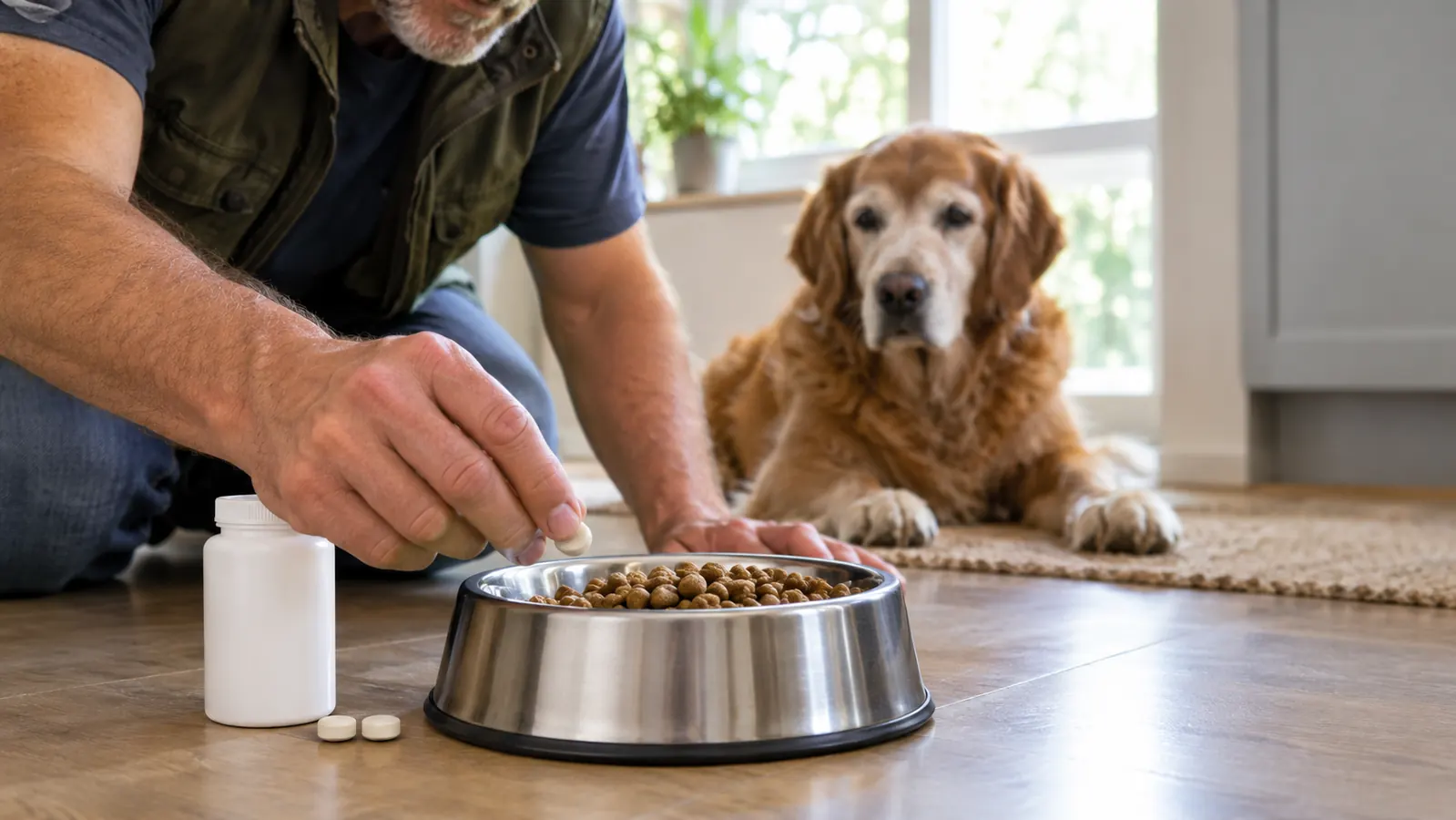
Cosequin chewable tablets are what Rosie has taken for about a year. Confirm the amount with your vet, put it in the breakfast bowl, and give it eight weeks before you decide whether it is doing anything.
Amazon Check Today's Price on Amazon →Step 1: Get a diagnosis before you buy a single bottle
Stiffness in an older dog is a symptom, not a diagnosis. Hip arthritis, an old cruciate injury, elbow trouble, spinal disease, and plain muscle weakness can all look similar from across the kitchen. Dr. Patel found Rosie's mild hip arthritis at her age-eight checkup by moving each hip through its range and watching how she planted her feet. She also mentioned some tartar while she was in there, which is a separate problem for a separate day.
That exam is worth the office visit. It tells you what you are actually managing, and it rules out the things that need a completely different plan. Ask directly whether a joint supplement is reasonable for your dog, and ask what amount you should be giving. Then follow the label and your vet. Not a forum post. Not me.
I am not a veterinarian and I am not going to play one here. I was a physical therapy aide. That means I know something about how joints behave under load, and I know exactly enough to stay in my own lane on the medical questions.
Step 2: Take the slip out of your floors
Our house is a one-story brick ranch with hardwood throughout. Lovely for a person. Lousy for an older dog with sore hips. A dog with arthritis loses some of the fine control in her back legs, and on a slick floor she does not just slip, she braces. Bracing all day long makes everything tighter than it already was.
I bought a set of non-slip socks, size Large, after measuring her paw across the widest part. The size chart put her between 2.5 and 2.8 inches. She wears them indoors on the hardwood in the mornings and evenings, when the floor is at its worst, and never on walks and never overnight. The first week she pulled one off with her teeth twice. Now she ignores them. A sock twists sideways now and then and I straighten it. They go through the wash once a week.
I measured twice before I ordered, because a sock that is too small pinches and one that is too big spins around on the foot. The back feet are the ones that matter most and they are also the hardest to measure, so I did it while she was lying down with a treat in front of her nose. What I learned the slow way is that placement beats equipment. There is one stretch of hallway between the kitchen and the back door, maybe eleven feet of it, and that was the slickest run in the house. I put a runner down there and left the rest of the floor alone. She has not splayed once since, and it has been a year.
If socks feel like too much, rugs do the same job. A runner down the hallway. A mat at the bottom of the porch steps. A cheap carpet square where she sleeps. Anything that gives her back feet something to grip.
Step 3: Change the shape of the walk, not the distance
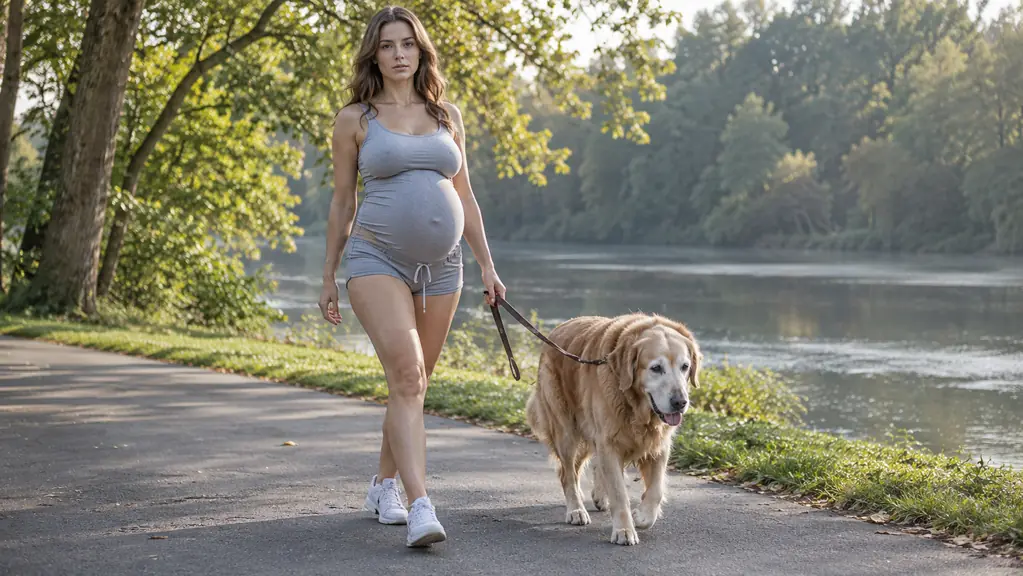
Rosie's favorite thing on this earth is the walking trail down by the French Broad River, and we still go. What changed is how. One slow mile became two shorter loops with a rest in between. Same amount of movement, a lot less stiffness in the two hours afterward.
Movement is the best thing you can do for an arthritic joint. Cartilage gets its nutrition from being loaded and unloaded, not from blood the way muscle does. A dog that lies on the couch all day gets stiffer, not safer. The trick is dose. Short and frequent beats one long push every time.
Watch the day after, not the day of. If she is limping more the next morning, that walk was too long, or the ground was too hard, or the weather turned on us. Cold mornings are worse for her, and I do not force the trail on those. We do the yard and the driveway instead and she is fine with it.
What I got wrong at first was timing. I used to take her out right after breakfast, when she had been lying down for eight hours and was at her stiffest. Now we do a short loop around the yard first, come back in, and take the real walk twenty minutes later once she has warmed up. The difference on the trail is plain. She sets a steady pace from the first hundred yards instead of limping the first quarter mile and loosening up after. If you change only one thing about the walk, change when you leave the house.
Step 4: Get the weight right, because it is the biggest lever you have
Rosie runs about sixty-eight pounds on a good day. Every extra pound on a dog is load carried on four joints that are already unhappy, and it is the one thing you can change that costs nothing. If your dog is carrying even a couple of pounds more than she should, that matters more than any bottle on the shelf.
You should be able to feel ribs without pressing hard. From above, there should be a waist behind the rib cage. Ask your vet to body-condition-score your dog and give you a number, then measure the food with an actual measuring cup instead of eyeballing the bowl. Count the treats into the day's total instead of treating them as air. That is the entire method and it works.
My own failure here was the food switch. I changed her kibble too fast last spring, which had nothing to do with her joints and everything to do with a week of loose stool I could have avoided. Dr. Patel suggested a probiotic powder to settle it, one sachet stirred into dinner, and her stools firmed up within a few days. The lesson stuck. Change one thing at a time and give it two weeks before you change the next thing, or you cannot tell what helped. That applies to the joint supplement, and it applies to the food bowl even more, because the food bowl is where the weight actually lives.
Step 5: Put the joint supplement on a fixed schedule and give it eight weeks
This is where Cosequin fits. When Dr. Patel found the hip arthritis, she said a glucosamine and chondroitin supplement was reasonable to try, and Nutramax Laboratories was the name I recognized from the clinic shelf. The chewable tablets combine glucosamine hydrochloride, sodium chondroitin sulfate, and MSM. The listing notes that Cosequin is the number one vet recommended retail joint health supplement brand. Read that as a statement about the brand, not a promise about your dog.
Rosie gets the amount the label lists for her weight, with breakfast, after I confirmed that amount with Dr. Patel. She eats the tablet like a treat, which is the only reason the habit survived the first week. A supplement that sits untouched in the bowl does nothing for anyone. If your dog is picky, break it into wet food and watch that it actually goes down.
Before this one, I tried a soft chew from a brand I will not bother naming. She ate exactly two and then started spitting them onto the rug beside her bowl. I tried stirring a powder into her dinner and she went off her food for three days. That is not a knock on either product. It is the reality of a dog with a sensitive stomach and a very good nose. The tablet worked because she files it under food, and a daily habit only holds if the dog agrees to it. Whatever you pick, look in the bowl after she walks away from it.
Then give it time. Around six to eight weeks in, I noticed she was getting up from her bed with less hesitation, and taking the porch steps more easily than she had in months. That was the whole change, and it was enough to keep going. She is still stiff on cold mornings. It helps her. It does not reverse anything, and I would be lying to you if I said otherwise.
What Else Helps
Warmth before movement. Ten minutes on a heated bed, or a warm towel laid over the hips while she wakes up, loosens a stiff dog more than people expect. Cold makes a sore joint stiffer. That is the whole reason winter mornings are the hard ones and July mornings are not.
Ramps and steps. Getting in and out of the Outback was the first thing Rosie started avoiding, and I pretended not to notice for a while. A lightweight ramp to the back seat ended the argument. Inside the house, a set of carpeted steps to the couch saves her a jump she should not be making anymore.
Nail trims. Long nails change how a dog's foot lands and push the whole leg out of line. Rosie gets hers done every few weeks. It is not glamorous, it is just mechanics, and it is one of the few things you can fix in twenty minutes.
And a word about the internet. There are a great many pills and powders out there with enormous promises attached, and most of them will not survive a fair trial. Glucosamine and chondroitin come up most often in conversations with vets, and the research in dogs is mixed but reasonable enough that plenty of vets suggest trying it. Start one thing at a time and give each one long enough to judge, so you know which one is doing the work and which one is just costing you money.
Keep notes. I write down the morning, the weather, and whether she hesitated at the steps. Not because I am running a study, but because memory is generous and a stiff dog deserves better than my memory.
Around six to eight weeks in, she was getting up from her bed with less hesitation and taking the porch steps more easily than she had in months.
None of this is dramatic. It is a rug, a shorter walk, a smaller bowl of food, a ramp to the car, and one chewable tablet with breakfast. But stack them up over a season and you get a dog who moves through her day a little more easily than she did last year, and that is the whole point.
One tablet with breakfast, eight weeks, then judge it for yourself.
Cosequin chewable tablets for dogs, from Nutramax Laboratories. Confirm the amount for your dog's weight with your vet first, then give it time before you decide.
Amazon Check Today's Price on Amazon →