
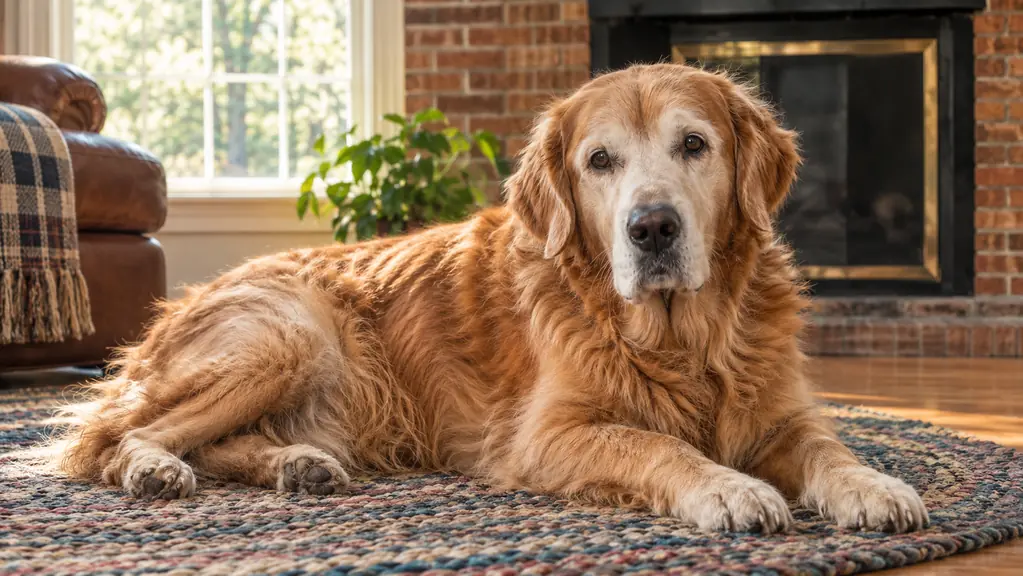
Every August, Rosie starts scratching. She is a nine-year-old yellow Labrador mix, sixty-eight pounds, adopted from the county shelter at two, and she has opinions about late summer in these mountains. The sound that gets me out of bed at two in the morning is not barking. It is the steady thump of a back leg against a hardwood floor, then a pause, then the same thump again.
Rosie is my dog, and I am Lyle Ashcraft, not a veterinarian. I am a retired physical therapy aide, and the one thing that job taught me is that recovery is boring and unfinished. The first two summers I treated her itching like a shopping problem. A medicated shampoo, then a different shampoo, then a spray that smelled like a candle shop. None of it held. What worked was a routine: a vet visit, a real bath schedule, clean bedding, flea control all year, and a skin barrier supported from the inside. That last part is where Native Pet Omega 3 oil comes in.
Support the skin barrier from the inside, after your vet clears the itch
Native Pet Omega 3 oil blends wild-caught salmon oil and pollock oil into one pump bottle, with omega 3 and 6 fatty acids aimed at skin and coat. The label calls for two pumps per 20 pounds of body weight daily. Ask your vet about the amount for your dog, then give it a full eight weeks before you form an opinion.
Amazon Check Today's Price on Amazon →Step 1: Have the skin looked at before you buy anything
An itch is a symptom. It is not a diagnosis, and it is not a product category. Dr. Patel at our small-animal clinic in town has looked at Rosie's skin three Augusts running, and each time the list of possibilities was longer than I expected: fleas, a yeast overgrowth, a bacterial infection, a food sensitivity, thyroid trouble, and plain environmental allergy from the pollen and mold that hang in the air here from July through October. You cannot shampoo your way out of a yeast infection. You cannot oil your way out of fleas. Get the cheap, fast answers first.
What Dr. Patel found on Rosie was nothing dramatic. Her skin was inflamed along the belly and the inside of the back legs, her ears were clear, and the pattern, the same six weeks of late summer every year, pointed at something in the environment rather than something in the bowl. That is a useful thing to know, because it changed where I spent money. A food elimination trial would have cost me months. Instead we treated the flare, protected the barrier, and managed the house.
I will say the obvious thing because it needs saying. I am not qualified to diagnose your dog, and nothing here replaces a vet who can put hands on her. What I can give you is the list of questions. Ask what they think is driving the itch. Ask whether there is a secondary infection. Ask what amount is right for your dog's weight for anything you plan to give, including an over-the-counter oil. Ask what would make them want to see her again in two weeks.
Step 2: Bathe on a schedule instead of on a feeling
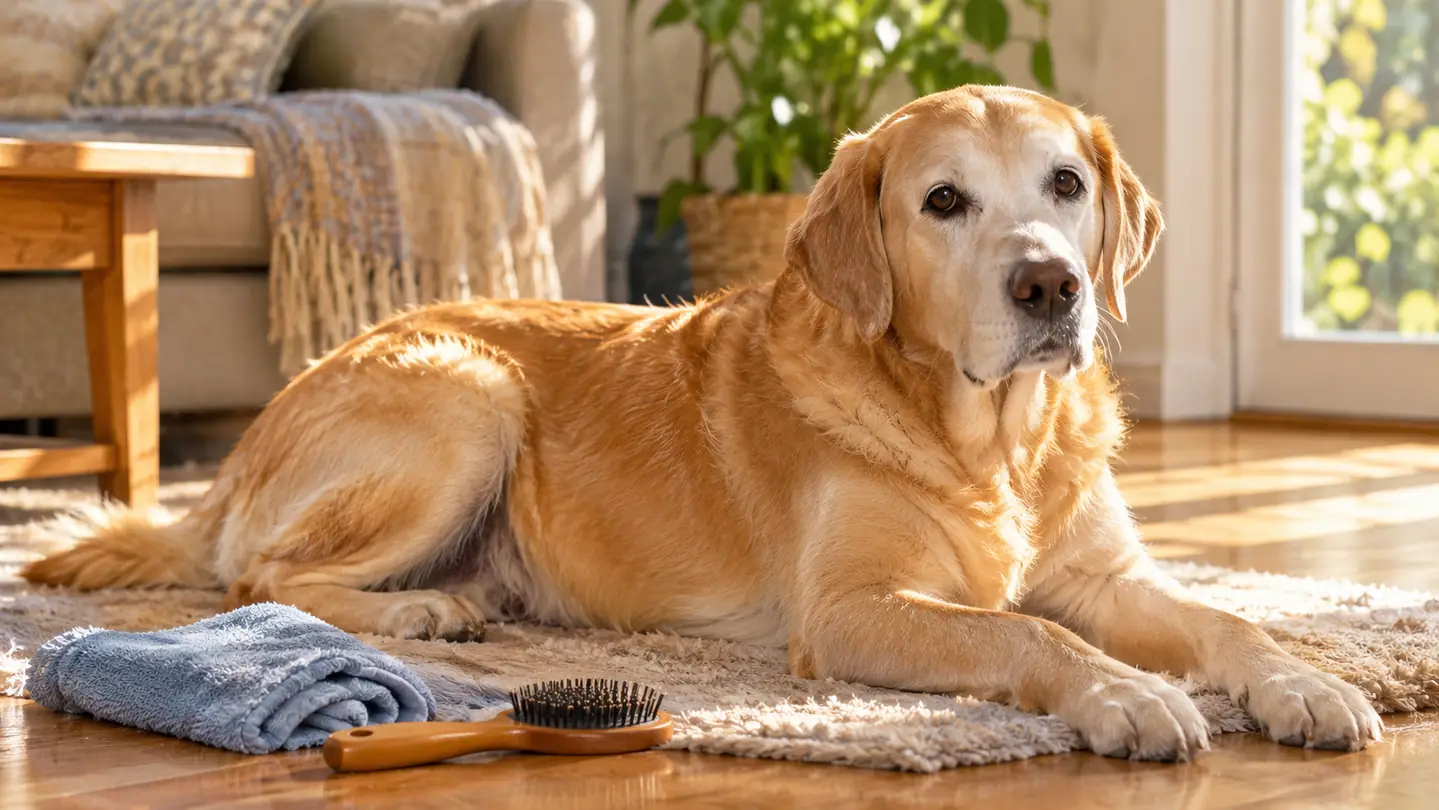
The instinct when a dog is itchy is to bathe her more, and that instinct can backfire. Wash a dog too often with the wrong shampoo and you strip the oils that make up the skin barrier, which leaves her drier and more reactive than she was. Dr. Patel's guidance for Rosie was a gentle colloidal oatmeal shampoo every two weeks during the season, lukewarm water, and a long rinse. Not every day. Not never.
Rinsing is the part everybody underdoes. I rinse her about twice as long as feels necessary, working down through the armpits, the inside of the thighs, and the space between the toes, because that is where shampoo residue sits and keeps irritating after the bath is over. Then I dry her properly, which matters more on an older dog than I used to think. A damp coat against skin in a house with the air conditioning running is a good way to end up with a hot spot.
The schedule lives on the paper calendar by the refrigerator, because if it lives in my head it does not happen. Every other Sunday from the middle of July until the first cold snap. It is not exciting. It is the most reliable thing in the whole routine.
Step 3: Wash what she sleeps on, on a calendar
Rosie sleeps on a washable bed in the corner of the living room and spends half the afternoon on a throw blanket on the couch, and both of those surfaces collect exactly what she is reacting to. Pollen. Dust mite waste. Her own dander and saliva. Bathe the dog and skip the bedding and you have put a clean dog back into a dirty environment every single night.
Once a week in season: hot water, a fragrance-free detergent, no fabric softener, and a full dry cycle. I do it on the same Sunday as the bath so it is one job instead of two. The collar and the harness get wiped down as well, since both sit against skin all day.
The yard counts as part of the house. I keep the grass cut short in August so it goes to seed less, and I rinse her paws and belly with the hose after the walking trail by the French Broad River, because that mile is grass and weeds and she comes home wearing all of it.
Step 4: Look hard at what goes in the bowl
Rosie has a sensitive stomach. I learned that the hard way last spring when I switched her food too fast and spent a week following her around the yard with a bag. Dr. Patel suggested a probiotic powder, one sachet sprinkled on her dinner, and her stools firmed up within the first week or so. I keep a box in the pantry now for the occasional upset, and I call the clinic first if it lasts more than a day or two or comes with vomiting or lethargy.
This belongs in an article about itchy skin because a dog with a churning gut is a dog whose whole system is under strain, and skin is expensive for a body to maintain. I am not going to tell you that fixing the gut fixes the skin. I will tell you that when her digestion is steady, everything else about her is steadier, coat included.
So do the boring audit. Count the treats, including the dental chew after the evening walk, and keep them inside the day's total instead of on top of it. Notice the table scraps. Notice whether a rough week lines up with a new food or a new bag. Write it down for a month and you will know more than any list on the internet can tell you.
Step 5: Add a fish oil, then leave it alone for eight weeks
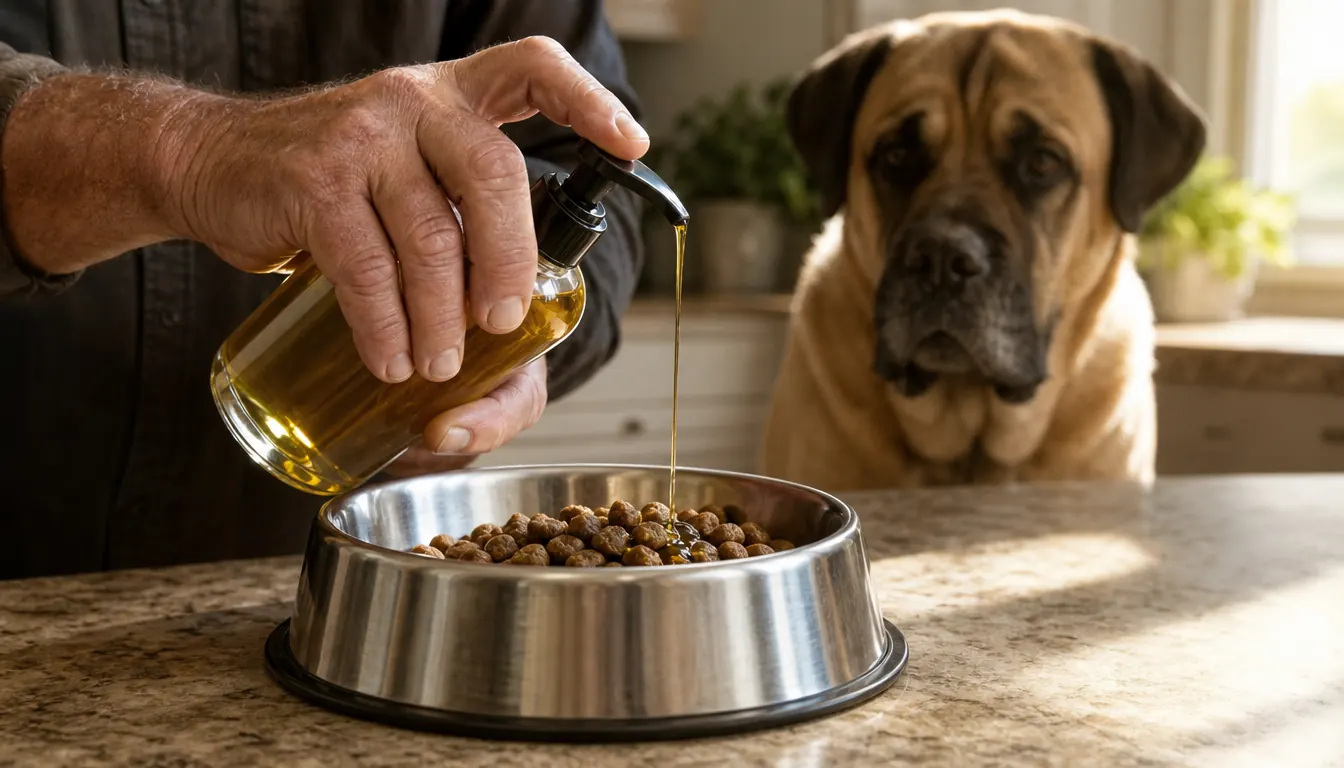
Native Pet Omega 3 oil is an 8 ounce pump bottle of wild-caught Alaskan salmon oil and wild-caught pollock oil, no fillers, and the label calls for two pumps per 20 pounds of body weight daily. That is the whole product. Two fish sources, a pump, and a number based on weight. I started Rosie on it last July when the late-summer scratching began, which is a poor time to start anything, because you cannot tell what is working. Start in May if you can.
I confirmed the amount for her weight with Dr. Patel and worked her up to it over about a week, half in the morning at first, because a sudden hit of oil can loosen a dog's stool and Rosie's stomach does not need the practice. Now it goes on her breakfast, pumped over the kibble, and she licks the bowl like I have done her a personal favor. It smells like a fish market. She considers that a feature.
The first three weeks, nothing. Week five, I realized I was not hearing the two in the morning thump as often. By about two months her coat had a shine that had gone dull somewhere in her eighth year, and a thin patch on her flank had filled back in. What I want to be clear about is that the itch season still shows up. Last August she still scratched. She just did not chew herself raw, and she slept through more nights than she had the summer before. That is what a supplement does. It moves the needle. It does not remove the needle.
It also does not work for every dog. The listing sits at 4.4 stars across sixteen thousand reviews, which sounds like a settled question until you read the one-star reviews and notice that most of them are about loose stool or a dog who would not touch it. Both complaints are real. If your dog has a history of pancreatitis, a touchy gut, or is on any medication, ask your vet before you add oil to the bowl. And do not leave the bottle in a hot car.
What Else Helps
Traction is not the first thing people connect to itchy skin, but it matters for an older dog who is up and down all night scratching. Rosie's back legs splayed on the hallway hardwood last winter, so I measured her paw and bought her a set of non-slip socks in size Large. She wears them indoors on the hardwood in the mornings and evenings, never on walks and never overnight. The first week she pulled one off with her teeth twice; now she ignores them. A sock twists now and then and I straighten it. They go in the wash weekly with everything else.
The rest is small and unglamorous. A cool rinse on a hot afternoon. A fan in the room where she sleeps. Windows shut during the worst pollen weeks and a fresh furnace filter. And the walking trail, honestly, because a dog who gets her slow mile in the morning is a dog who settles at night. I would not trade that mile for anything, even if it means rinsing her paws when we get home.
What I would not do is reach into the medicine cabinet. No human antihistamine and no steroid cream without a call to the clinic first. That is a two minute phone conversation and it saves a week of guessing.
The oil did not stop August. It made August something Rosie walked through instead of something she chewed herself through.
The last box to tick, not the first one
Get the vet visit, the bath schedule, and the clean bedding in place first. Then pump Native Pet Omega 3 oil over breakfast at the amount your vet approves for your dog's weight, and give it eight weeks before you judge it. One bottle, one pump, one squirt over the kibble, and a coat that comes back with some shine in it.
Amazon Check Today's Price on Amazon →