
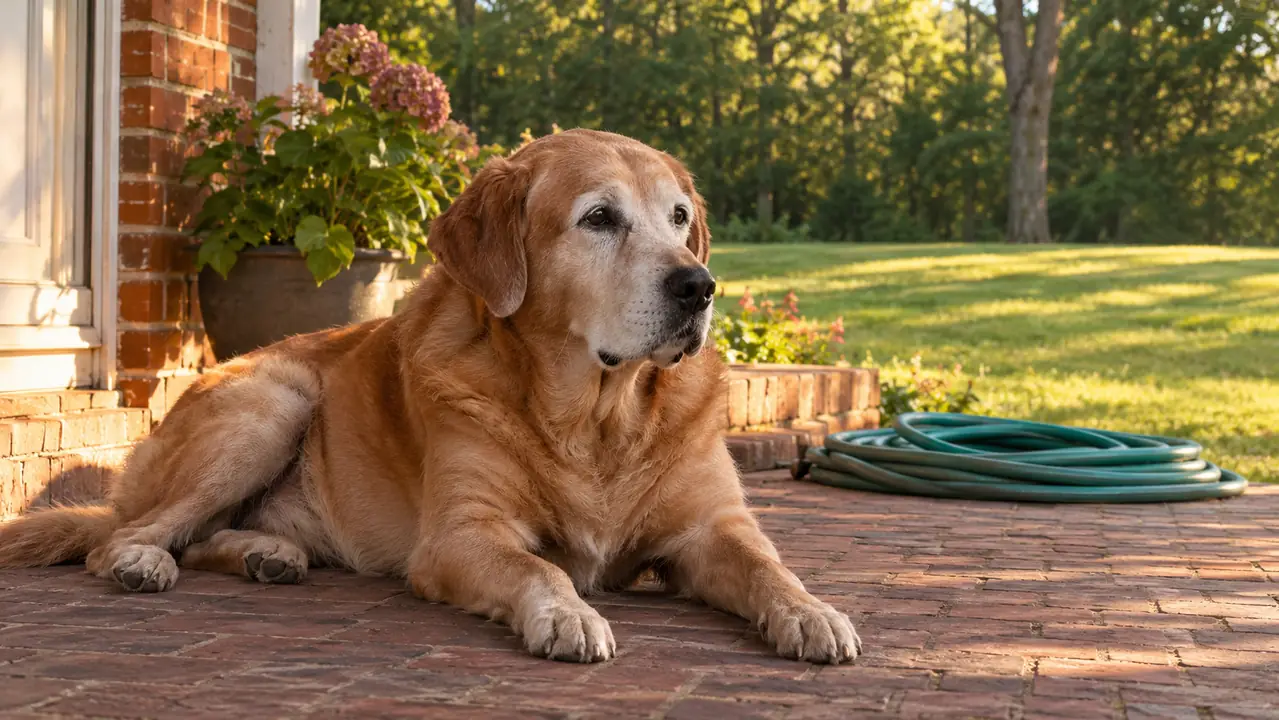
Rosie started scratching in the third week of July. Not the little scratch behind the ear that lasts two seconds and is over. This was the three in the morning kind, the jingle of her collar tags against the hardwood, then the thump of a back leg working at her ribcage for a full minute before she gave up and lay back down.
There is a small bottle on my kitchen counter that belongs to this story. Eight ounces, a pump on top, wild-caught salmon oil and wild-caught pollock oil, made by Native Pet. It did not stop the scratching dead, and I want to say that at the front end, because I have read enough labels in my sixty-seven years to know how they talk.
Rosie is a yellow Labrador mix, nine years old, about sixty-eight pounds. I adopted her from the county shelter when she was two and she has been underfoot ever since. I spent thirty years as a physical therapy aide before I retired, which means I watched bodies compensate for things that hurt, and I know what it looks like when something is bothering a creature who cannot tell you where. I do not always know what to do about it.
First I did the cheap things. Checked her for fleas with a fine comb. Washed her bedding twice. Vacuumed the rugs. Gave her a bath with the oatmeal shampoo that had been under the sink since before I can remember. Nothing changed. So I drove her to the clinic, and Dr. Patel looked her over and said what she usually says in late summer, that it is environmental, the grass and the pollen and the heat, that Rosie's skin was irritated but not infected, and that a fish oil was a reasonable thing to add if I wanted to try one. She told me to follow the label for the amount and to call her if the skin broke open.
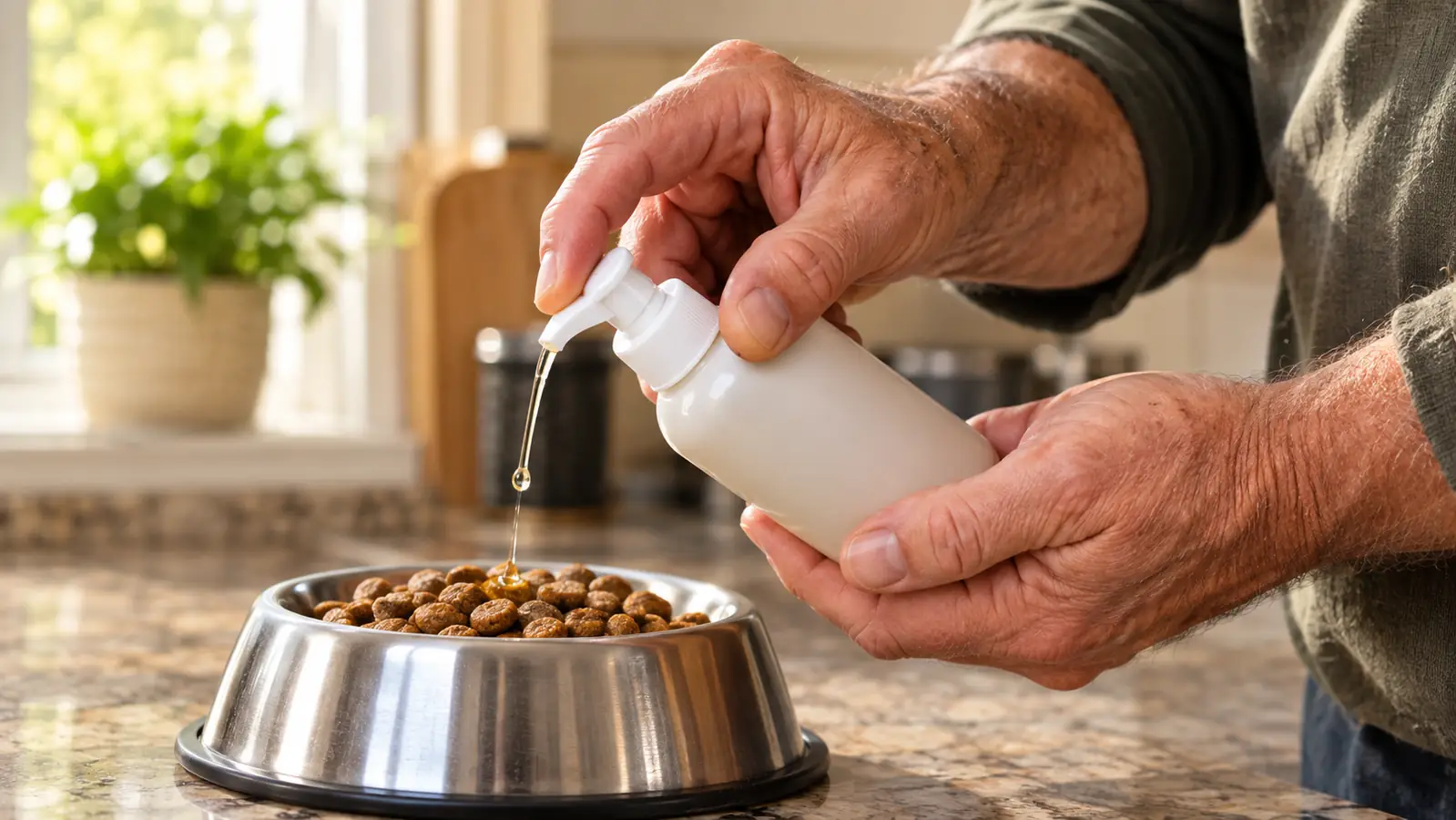
The label on the Native Pet bottle says two pumps per twenty pounds of body weight. Rosie is sixty-eight pounds, so I will not pretend the arithmetic is hard, but I did call the clinic to confirm it before I started. I gave her half of it the first few days and worked up over a week, because she has a sensitive stomach and I have cleaned up after a dog who ate something new too fast. She never had a problem with it.
That was last July. By the middle of September her coat had a shine to it that it had not had in a while, especially along her back where it had gone dry and dull. And the scratching eased off. Not gone. Eased. She would still go at her flank after a long walk in the tall grass by the river, but the three in the morning sessions stopped, and I started sleeping through the night again, which at my age is worth something.
The three in the morning sessions stopped, and I started sleeping through the night again, which at my age is worth something.
The eight ounce pump bottle that joined Rosie's breakfast bowl
Wild-caught salmon oil and wild-caught pollock oil, two pumps per twenty pounds of body weight, drizzled over kibble. It took about two months before I could see the difference in her coat. Read the label, call your vet, and start slow.
Amazon Check Today's Price on Amazon →I will tell you what it smells like, because nobody ever does. It smells like a fish market on a warm afternoon. I keep the bottle in the refrigerator door and I wipe the pump spout with a paper towel after I use it. Rosie does not care in the least. She licks the bowl clean and then looks at me as though I might have more somewhere.
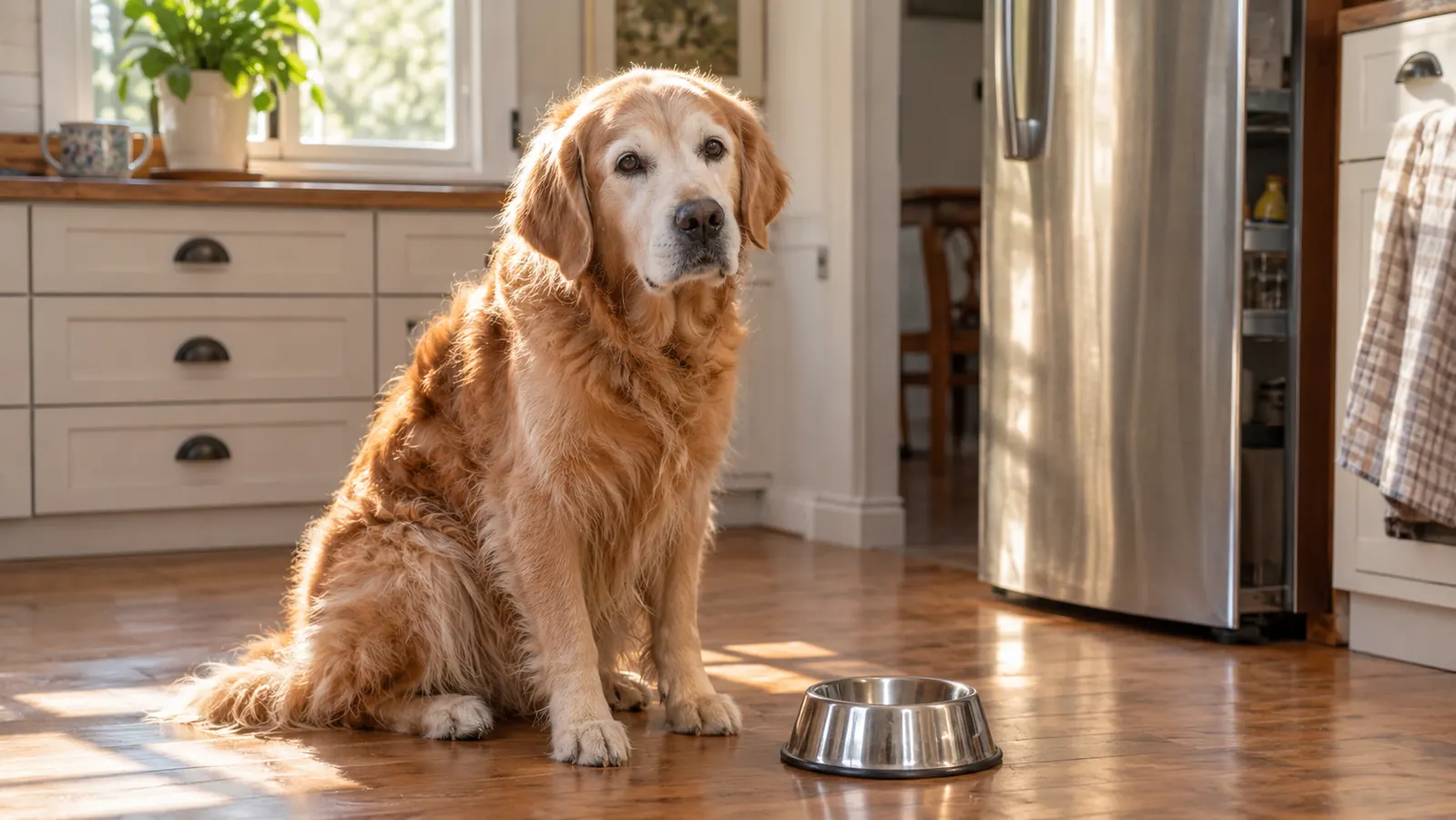
What it did not do: it did not cure the season. Late August is still late August in western North Carolina, and there were days she came in from the yard and went straight to the rug and rolled. I rinse her feet and belly with the garden hose after the trail when the grass is high, and that helps more than any supplement will. If your dog is chewing herself raw or losing hair in patches, that is a vet visit, not a bottle from Amazon. Rosie was cleared for infection before I started any of this.
What it did do, as far as I can tell, is give her skin a better footing. Native Pet blends two fish sources, salmon and pollock, and the omega 3 and 6 fatty acids in there support the skin barrier, which is the thing doing the actual work when the pollen rolls in. I am not a vet and I am not going to dress this up as more than it is. It is oil in a bowl. Her coat looks better and she is more comfortable, and I have kept buying it.
It has a place in the lineup now. Breakfast is the Cosequin tablet, which she takes like a treat, the FortiFlora when her stomach is off, and the oil at the label amount over the top. Dinner is dinner. One Greenies after the evening walk. None of it is complicated and none of it is a cure for anything. It is a routine that keeps a nine-year-old dog comfortable, and at this stage of her life that is what I am after.
What I'd Tell You If We Were Sitting at My Kitchen Table
I would tell you to call your vet before you buy anything, and I would mean it. Itchy skin in an older dog can be allergies, it can be fleas, it can be a thyroid problem, it can be an infection that needs antibiotics. Dr. Patel checked Rosie over before I changed a thing, and she told me what amount to use. That conversation cost me one office visit and it saved me months of guessing.
I would tell you to give it time and to start slow. Two months is where I noticed the difference, not two weeks. Half the amount for the first few days, then up to the label rate, especially if your dog has a sensitive stomach like mine does.
And I would tell you not to expect a new dog. Rosie still has stiff hips in the morning and she still gets itchy in August. What changed is the degree. She is easier in her skin and her coat looks like it belongs to a dog who is being looked after. That is enough for me.
If your dog's itch season is starting, start here
One pump bottle, two fish sources, no fillers. Check it with your own vet first, then work up to the label amount over a week and give it a full two months before you decide anything.
Amazon See the Native Pet Omega 3 on Amazon →